
Successful SEO for a Japanese Manufacturer
RESULTS
1 year
5 (all from outside the local city)
2
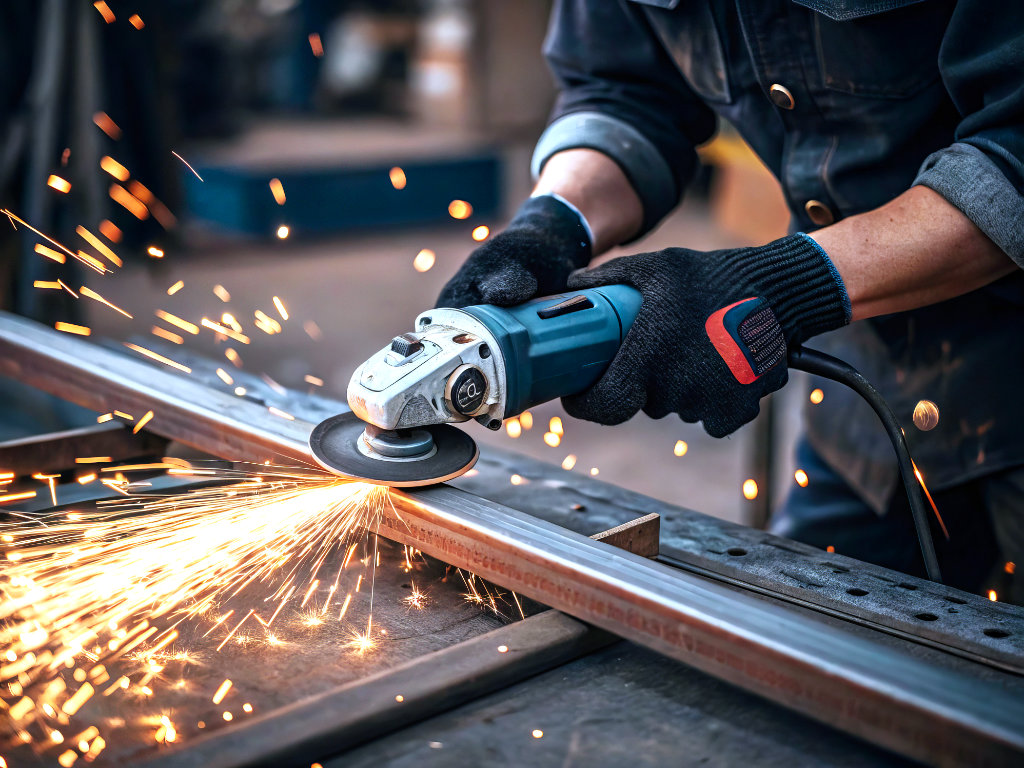
[Case Study] Breaking Free from Subcontractor Dependency: Website Renewal and SEO Strategy for New Client Acquisition in Precision Metal Processing
A manufacturer with 15 employees based in Sagamihara City, Kanagawa Prefecture, had cultivated high-precision metal processing technologies over many years. However, due to a decline in orders from their primary client, they faced intense anxiety regarding their future revenue sustainability.
At the start of the project, they were in a highly challenging position: they had no dedicated sales representatives and had no idea how to market their own technical capabilities.
As their hands-on consulting partner, we stepped in to guide them through every step of the way—from auditing their latent technical strengths, to restructuring their web strategy to align with the search behavior of procurement managers, implementing rigorous SEO (Search Engine Optimization), and establishing a robust sales response system to convert inquiries into actual business. As a result, inquiries from completely new, wide-area clients—with whom they previously had no touchpoints—skyrocketed, enabling a successful departure from total reliance on a single prime contractor.
This case study highlights the journey of how a small, local factory leveraged the power of the web to get its new client acquisition on track, focusing on the challenges we resolved and the deeply collaborative communication style we used to support our client.
1. Initial Challenge: Identifying the Root Cause of the “Invisible and Unreachable” Technical Strengths
Project Background
At the launch of the project, the client possessed exceptional technical capabilities and flexible production systems, particularly in “high-precision aluminum milling” and “small-lot prototyping,” which stood strong against any competitor. However, these strengths were completely unrecognized outside of their existing clientele, resulting in virtually zero inquiries from new prospects throughout the year.
Our Data-Driven Approach
We conducted an in-depth analysis of their existing website traffic and analyzed the search behavior of procurement and R&D managers looking for manufacturing partners.
The results revealed that their website had not been updated for over a decade and was not mobile-optimized. Consequently, it received near-zero evaluation from search engines like Google, making it practically invisible. Furthermore, the site featured only abstract catchphrases like “kind, polite, and high quality.” It completely lacked the concrete, metrics-driven information that procurement managers actually look for, such as specific tolerances ($\mu m$ level precision), machinery capabilities (e.g., 5-axis machining centers), or feasibility of 1-piece prototyping. We identified this lack of specific technical communication as the root cause of the issue.
2. Strategic Restructuring: Targeting Niche Industry Keywords and Visualizing Technical Capabilities
Based on our analysis, we held intensive discussions with the management and factory floor managers to redefine their core strengths into “words and numbers,” proposing a drastic overhaul of their BtoB marketing strategy.
① Selecting Intent-Driven, Industry-Specific Keywords
Market research indicated that procurement and R&D managers do not search using broad terms like “metal processing.” Instead, they use specific combinations of keywords to solve immediate production challenges. Therefore, we narrowed the focus down to the client’s absolute strongest domains and built an SEO strategy around the following target keywords:
- “Aluminum Milling” (Clarifying their area of expertise by combining material and processing method)
- “Metal Processing Prototype Small Lot” (Capturing urgent needs for short lead times and low volumes)
- “Precision Parts Machining Kanagawa” (Targeting procurement managers looking for local or accessible partners)
② Turning Equipment and Case Studies into Convincing Content
Previously, the client had avoided publishing past work due to confidentiality concerns. We helped them obtain permission from clients where possible and photographed newly created sample work to demonstrate their capabilities. We explicitly listed specifications for each piece, including material, size, processing tolerance, and turnaround time. Additionally, we published a comprehensive directory of their operational machinery. This provided procurement managers with the exact data they needed to justify internally why this factory could handle their specific blueprints.
3. Implementation and Operational Strengthening: Designing High-Conversion Pathways and Response Manuals
Once the website was completely overhauled and traffic began to flow, we tackled the next crucial phase: improving inquiry quality and conversion rates. To ensure that increased traffic translated directly into revenue, we provided hands-on support to strengthen their internal sales response system.
[From Inquiry to Deal Closure: The Optimization Process]
- Implementing and Optimizing a Technical Consultation Form
- We upgraded the standard, rigid “Contact Us” form into a dedicated “Technical Consultation & Estimation Form” that allows users to easily upload blueprints (CAD data or PDFs) on the spot. This significantly lowered the barrier to entry and encouraged high-quality, project-specific inquiries.
- Developing an Internal “Inquiry Handling Manual”
- For the administrative and factory staff who were unaccustomed to handling cold inquiries, we created a standardized “Hearing Sheet” (covering material, quantity, deadline, and blueprint availability). This empowered anyone answering the phone or email to extract all necessary estimation data efficiently on the first try.
- Accelerating Response Times
- When compared against competitors, speed is the ultimate deciding factor. We established an internal protocol to “provide an initial response or an estimation feasibility confirmation within 24 hours of inquiry receipt” and supported the team until it became a habit.
As a result of these efforts, the new website ranked precisely as planned right after launch. Keywords that used to rank outside the top 100 surged to the first page of search results, and total website traffic multiplied by more than 5 times compared to the pre-renewal era.
4. Our Partnership Philosophy: How We Support Our Clients
What we value most in manufacturing-sector consulting is not just “designing a beautiful website,” but “translating the invaluable craftsmanship of factory workers into digital language.”
- Translating Technical Terms into Accessible Insights: Instead of throwing around jargon like “SEO algorithms,” “domain authority,” or “CVR,” we explain the logic behind our decisions—such as why a certain photograph is required or why a specific phrasing ranks better on search engines—using language that resonates with the manufacturing floor so that everyone can move forward with confidence.
- Asset Gathering with Zero Strain on the Floor: To ensure we didn’t interrupt the busy schedules of the craftsmen, our team took the lead on photography and drafting specifications. Through casual interviews with the workers, we uncovered “hidden superpowers” that they took for granted—such as ultra-thin wall milling without warping—and elevated them into powerful marketing differentiators.
- Post-Estimate Follow-Up Coaching: Getting an inquiry means nothing if it doesn’t close. We provided detailed coaching on sales follow-ups, such as crafting the perfect follow-up email a few days after submitting a quote to outperform competitors, helping a company with no formal sales department learn to close deals independently.
5. Current Impact and Future Outlook
Today, this metal processing company receives a steady stream of new technical consultations and estimation requests through its website every single month.
The origin of these inquiries has expanded far beyond Kanagawa Prefecture, reaching R&D departments across the entire Kanto region and even extending into the Kansai area—markets they could have never reached via traditional foot-in-the-door sales. Furthermore, initial prototype orders are increasingly turning into recurring, long-term mass production contracts. The company has successfully transformed its business structure into a resilient, independent entity capable of controlling its own pipeline without relying on a single upstream client.
When proven technical expertise is paired with a precise digital strategy, a local factory can transform into a highly visible, top-tier choice for clients nationwide. We will continue to stand firmly by the side of the manufacturing floor, working hand-in-hand to support sustainable business growth.

CONTACT
Get in touch to discuss how we can support your growth in Japan.